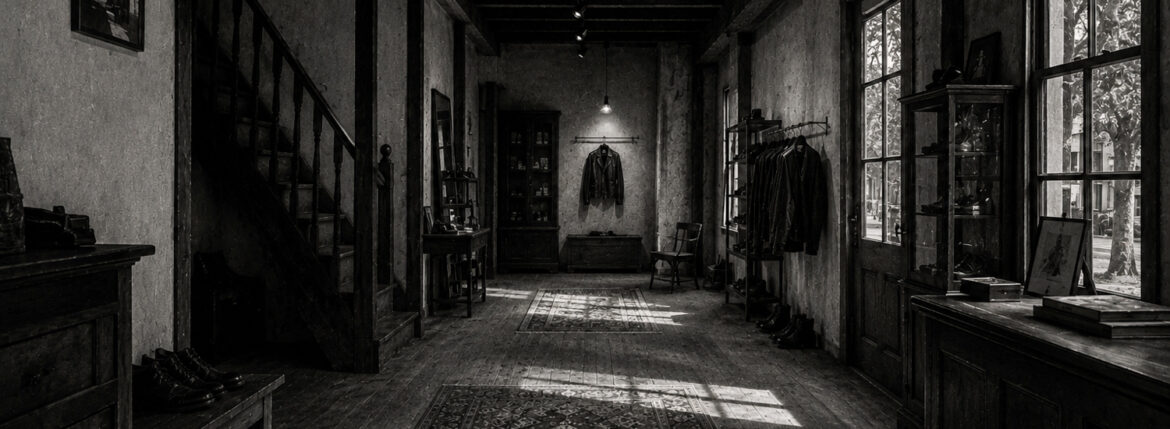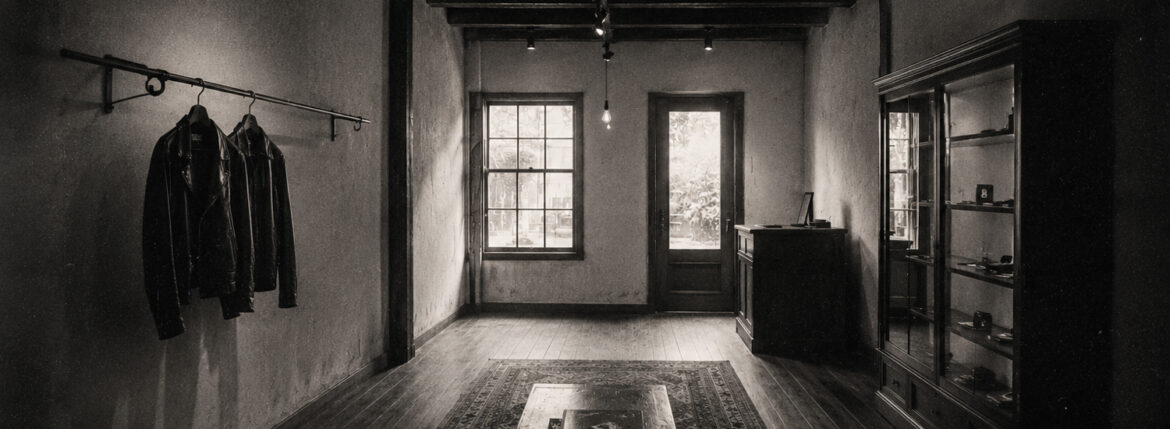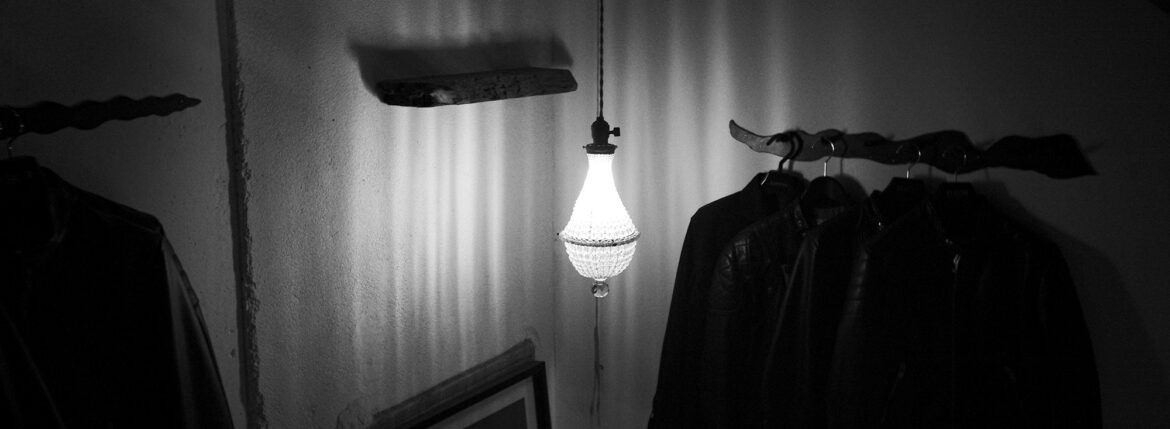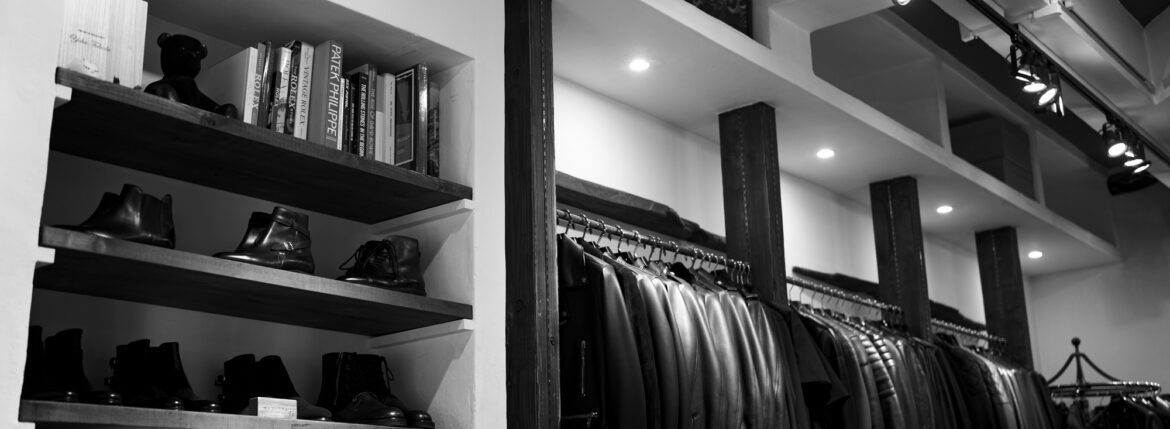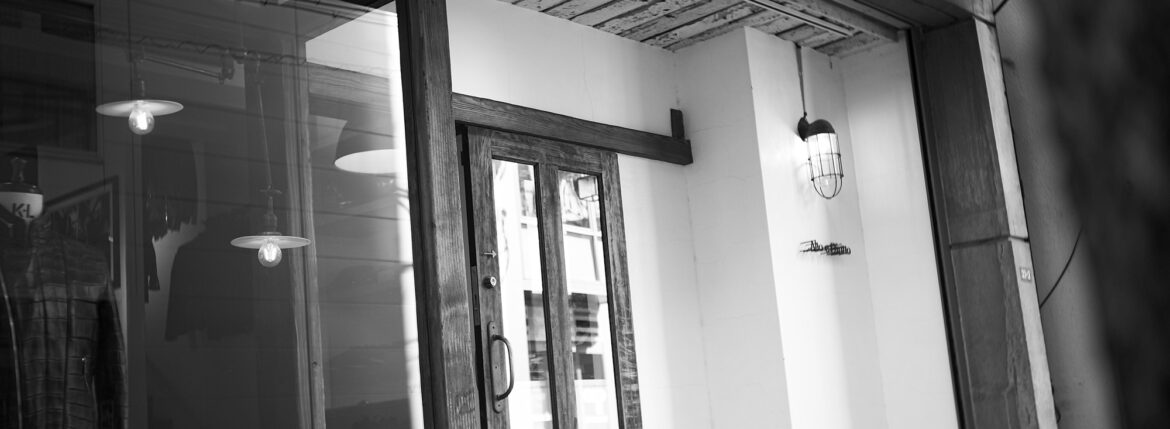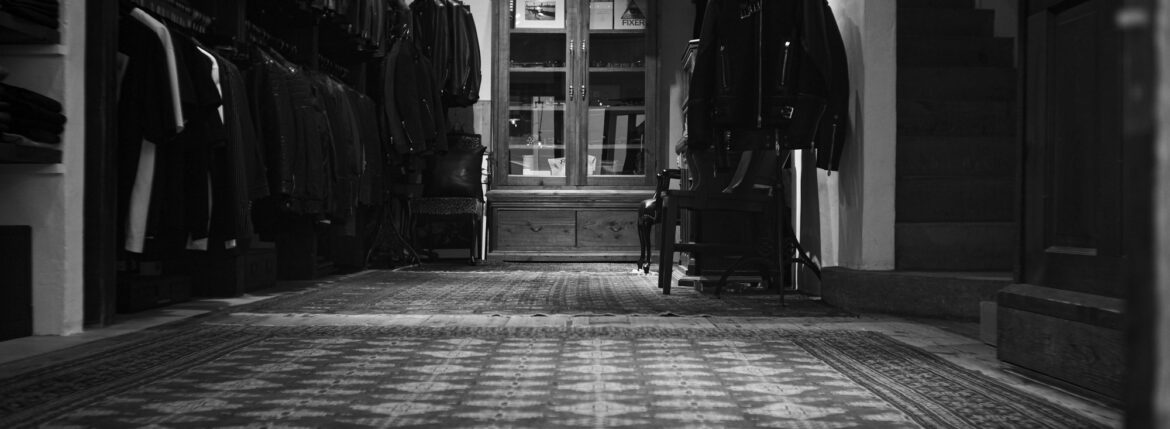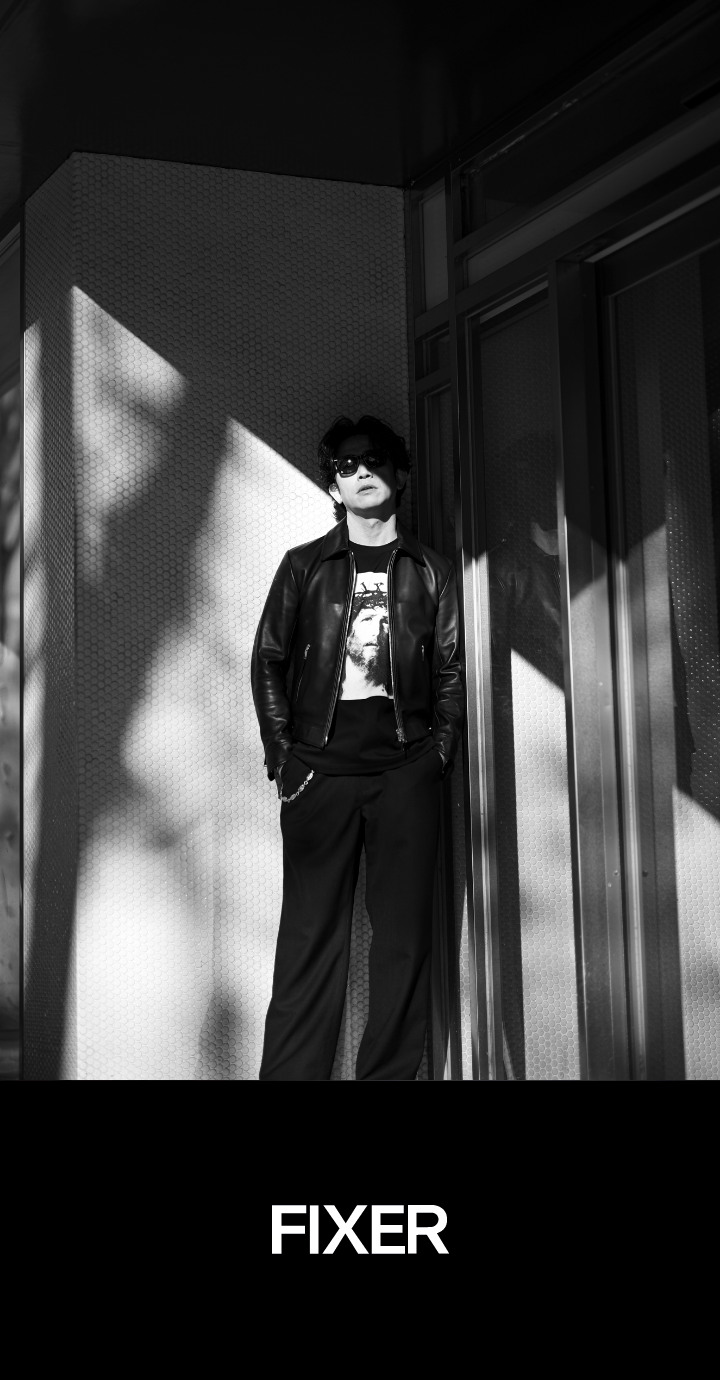
Chapter 1 | The Shop That Never Existed. / 存在しなかった店。
九〇年代の終わり頃。
その店は、まだ誰にも見つかっていなかった。
街は今よりも暗く、情報は今よりも遠かった。
欲しいものは検索するものではなく、
歩いて、迷って、辿り着くものだった。
その店は、大通りにはなかった。
人の流れから少し外れた場所。
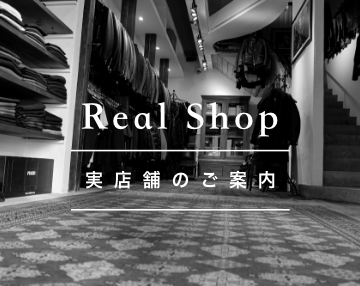
古いビルの階段を上がった先に、
重たい扉が一枚あるだけだった。
看板は小さかった。
主張するためではなく、
そこに在ることだけを示すための名前。
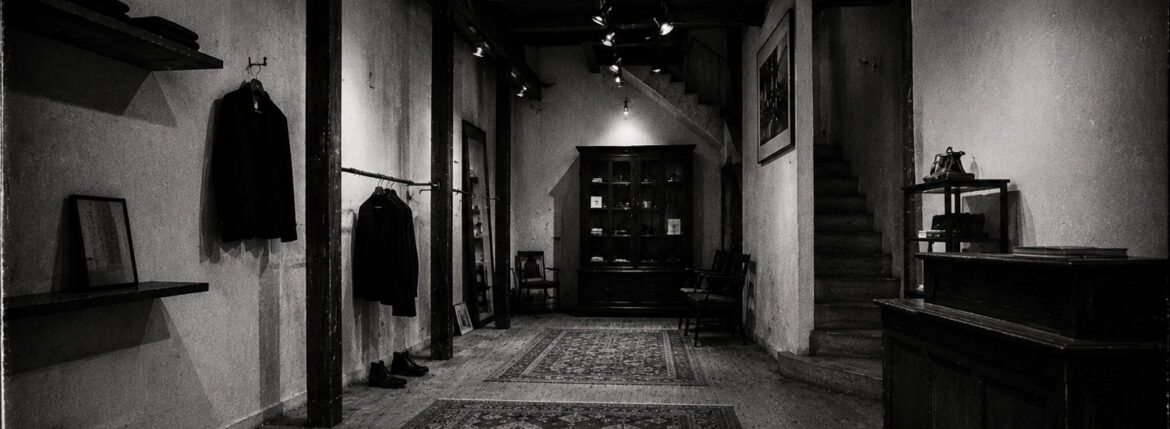
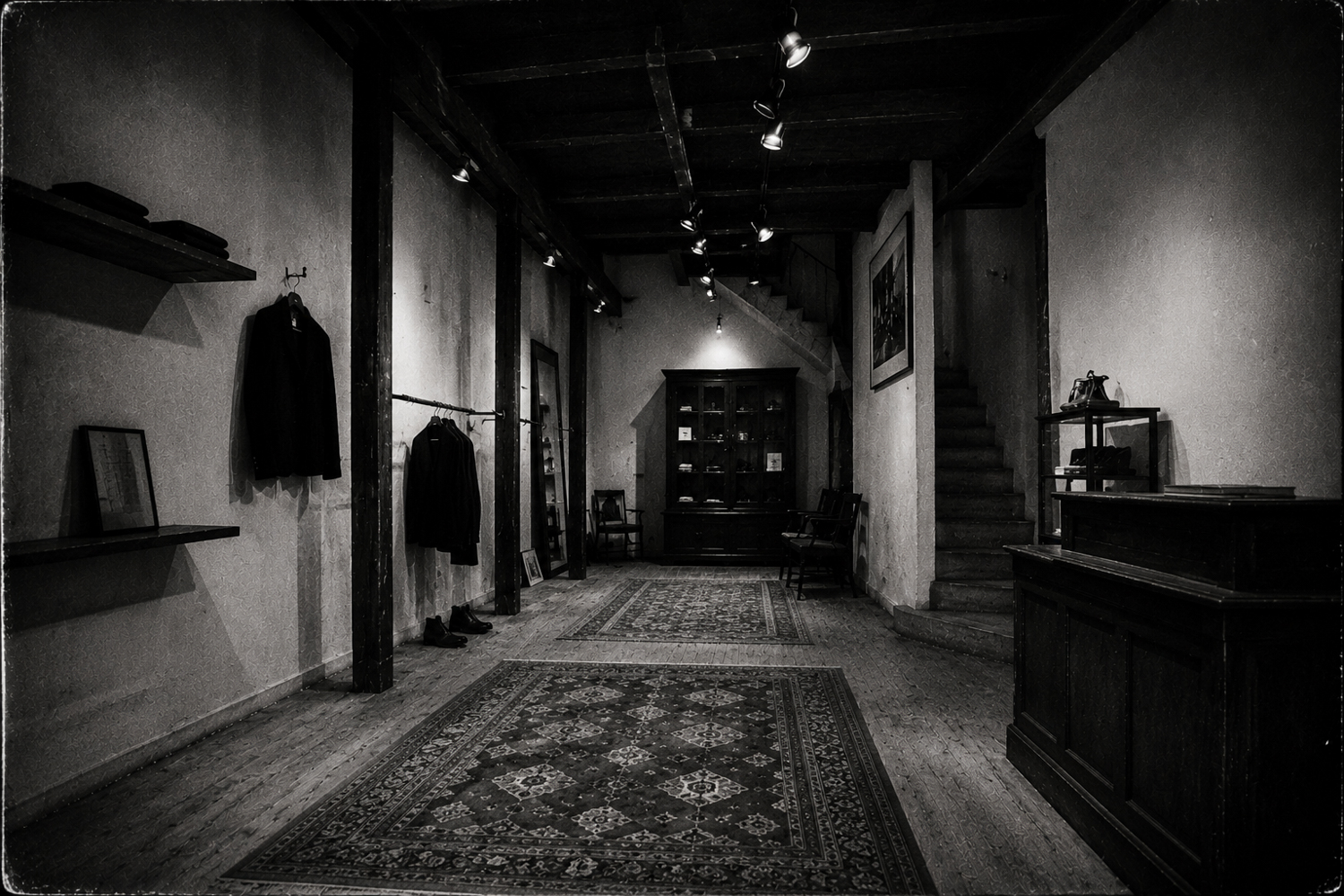
扉を開けると、
外の時間が、背中で閉じた。
音は少ない。
光も少ない。
けれど、不思議と暗くはなかった。
革の匂い。
木の沈黙。
鉄の冷たさ。
服は、飾られていなかった。
そこに置かれていた。
まるで、誰かを待っているように。
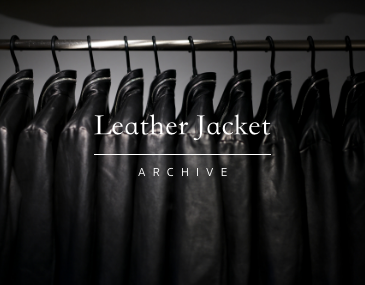
黒い革。
深いウール。
皺を恐れないシャツ。
名前よりも気配が先に立つ服。
流行しているものはなかった。
けれど、
古くなるものもなかった。
その店には、
新しさを競う空気がなかった。
誰かに見せるための服もなかった。
そこにあったのは、
自分の中にまだ言葉になっていない輪郭を、
静かに呼び起こすものばかりだった。
値段の話をする前に、
時間の話をしなければならない服。
似合うかどうかの前に、
その服に耐えられる自分であるかを問われる服。
九〇年代という時代は、
速くなろうとしていた。
雑誌が時代を決め、
街がそれを真似し、
若さがすべてを飲み込んでいた。
けれど、その店だけは違った。
若さに媚びない。
流行に跪かない。
大衆に向かって叫ばない。
ただ静かに、
美しいものが美しいまま残るための場所として、
そこに在った。
扱っていたのは、
ブランドではなかった。
Maison Martin Margiela の匿名性。
Helmut Lang の静かな緊張。
Dries Van Noten の知性。
Carpe Diem の革に宿る孤独。
Carol Christian Poell の異物感。
けれど、それらの名前さえ、
店の中では前に出なかった。
大切なのは、
誰が作ったかではない。
その服が、
どれだけ長く沈黙に耐えられるかだった。
売れる服ではなく、
残る服。
目立つ服ではなく、
消えない服。
着る人を飾る服ではなく、
着る人の覚悟を露わにする服。
あの店は、
服を選ばせていたのではない。
人を選んでいた。
扉を開けたすべての人が、
客になれたわけではない。
金額ではない。
知識でもない。
その服の前で、
静かに立ち止まれるかどうか。
それだけだった。
説明は少なかった。
沈黙の方が多かった。
けれど、その沈黙には、
不思議な温度があった。
売りたい沈黙ではない。
待つ沈黙。
試す沈黙。
信じる沈黙。
服は、急がない。
革は、急がない。
仕立ては、急がない。
人間だけが、
すぐに答えを欲しがる。
その店は、
答えを与えなかった。
代わりに、
問いを残した。
お前は、何を着て生きるのか。
お前は、何を残して消えるのか。
三十年近く経った今、
その店が本当に存在したのかは分からない。
記憶は曖昧で、
場所も、
階段の数も、
扉の重さも、
もう正確には思い出せない。
けれど、
あの空気だけは残っている。
誰にも説明できないまま、
身体の奥に残っている。
たぶん、店とはそういうものだ。
場所ではない。
商品でもない。
誰かの人生に、
静かに残り続ける気配のことだ。
もし、九〇年代にAlto e Dirittoが存在していたなら。
それは、
時代の中にあった店ではない。
時代の外側で、
時代を見つめていた店だった。
そして、きっと今も変わらない。
流行を売らない。
数を追わない。
騒がしさで人を集めない。
ただ、
深く、
静かに、
強く残るものだけを信じている。
あの店は、
服を売っていた記憶がない。
それなのに今でも私は、
あの店を着続けている。
Toward the end of the 1990s.
The shop had not yet been found by anyone.
The city was darker than it is now,
and information was farther away.
What you wanted was not something you searched for.
It was something you found by walking,
getting lost,
and finally arriving.
The shop was not on the main street.
It stood slightly apart from the flow of people.
At the top of an old building’s staircase,
there was only one heavy door.
The sign was small.
Not to insist on itself,
but simply to show that it existed.
When the door opened,
the outside world closed behind your back.
There was little sound.
Little light.
Yet somehow,
it was not dark.
The scent of leather.
The silence of wood.
The coldness of iron.
The clothes were not displayed.
They were simply there.
As if waiting for someone.
Black leather.
Deep wool.
Shirts unafraid of wrinkles.
Clothes whose presence arrived
before their names.
There was nothing fashionable.
And yet,
nothing that would grow old.
That shop had no air of competing for newness.
No clothes made merely to be seen by others.
What existed there were things
that quietly awakened
the unnamed outline within oneself.
Clothes that required a conversation about time
before a conversation about price.
Clothes that asked,
before whether they suited you,
whether you were the kind of person
who could withstand them.
The 1990s were trying to become faster.
Magazines decided the age.
The streets imitated it.
Youth swallowed everything.
But that shop was different.
It did not flatter youth.
It did not kneel before trends.
It did not shout toward the masses.
It simply existed,
quietly,
as a place where beautiful things
could remain beautiful.
What it carried
were not brands.
The anonymity of Maison Martin Margiela.
The quiet tension of Helmut Lang.
The intelligence of Dries Van Noten.
The solitude dwelling in the leather of Carpe Diem.
The strangeness of Carol Christian Poell.
And yet,
even those names
never stepped forward inside the shop.
What mattered was not
who had made the clothes.
It was how long
the clothes could endure silence.
Not clothes that sell.
Clothes that remain.
Not clothes that stand out.
Clothes that do not disappear.
Not clothes that decorate the wearer,
but clothes that reveal the wearer’s resolve.
That shop did not let people choose clothes.
It chose people.
Not everyone who opened the door
became a customer.
It was not about money.
Not about knowledge.
It was whether one could stand still,
quietly,
in front of the clothes.
That was all.
There were few explanations.
There was more silence.
Yet within that silence,
there was a strange warmth.
Not the silence of wanting to sell.
The silence of waiting.
The silence of testing.
The silence of believing.
Clothes do not rush.
Leather does not rush.
Tailoring does not rush.
Only humans
want answers too quickly.
That shop
did not give answers.
Instead,
it left questions.
What will you wear
as you live?
What will you leave behind
when you disappear?
Nearly thirty years later,
I no longer know
whether that shop truly existed.
Memory is vague.
The place,
the number of stairs,
the weight of the door.
I can no longer remember them precisely.
And yet,
only that atmosphere remains.
Still inside the body,
without ever being explainable to anyone.
Perhaps that is what a shop truly is.
Not a place.
Not products.
But a presence
that continues to remain quietly
inside someone’s life.
If Alto e Diritto had existed in the 1990s,
it would not have been a shop
within the age.
It would have been a shop
standing outside the age,
quietly watching it.
And surely,
even now,
nothing has changed.
It does not sell trends.
It does not chase numbers.
It does not gather people
through noise.
It believes only in what remains
deeply,
quietly,
and strongly.
I have no memory
of that shop selling clothes.
And yet even now,
I continue to wear that shop.]
by S
Alto e Diritto / アルト エ デリット
http://www.altoediritto.jp/
https://www.altoediritto.com/
OPEN /// 12:00~18:00
CLOSE /// TUESDAY,WEDNESDAY
TEL /// 052-253-7718
〒461-0001 愛知県名古屋市東区泉1-23-2
地下鉄久屋大通駅1-A出口より徒歩1分